
Fall Prevention
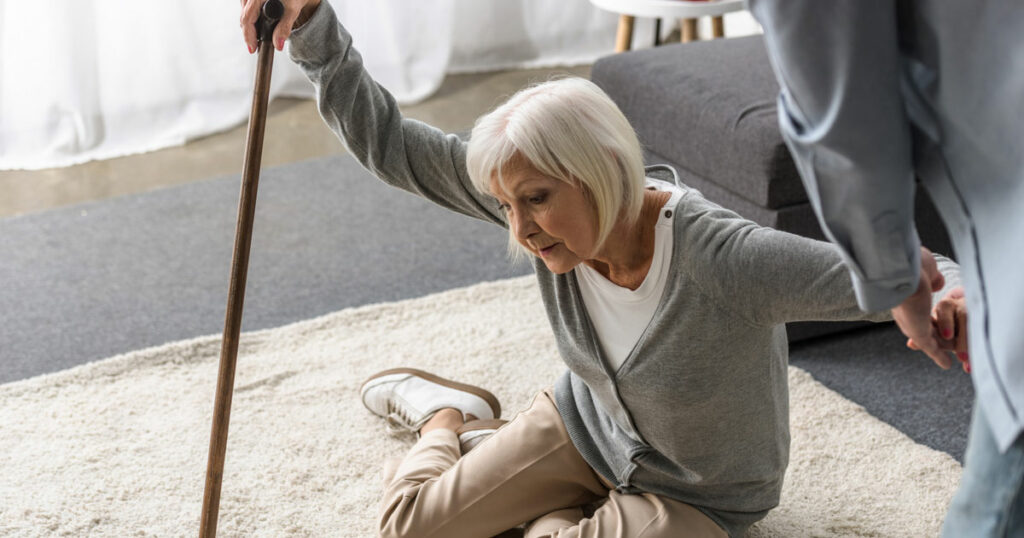
Falls are one of the most serious public health issues associated with ageing. It is the leading cause of both fatal and non-fatal injuries in older adults aged 65 years and overi. In addition, it may lead to lack of independence in daily living, psychological trauma, and social dysfunction that results in high demand of health care services and enormous social costsii. This article is to pair with a home exercise program of balance and strength for fall prevention for frail elderly adults.
Multiple factors play a role in falls and related injuries, such as cognitive impairment, vision, musculoskeletal conditions and pain (arthritis, osteoporosis), medication, sarcopenia (reduced muscle mass), poor gait and balanceiii. Following most of physiotherapy assessments, strength and balance were highlighted as primary factors to focus on to improve falls risk. In order to help prevent falls and improve the functional capacity, exercise intervention has been shown to be effective in elderly individuals undertaken in the communityiv. It has been found that strength training results in rehabilitating normal muscle size, and enhancing muscle strength and power, and cardiorespiratory fitness and balance in frail older adultsv. Increasing lower limb muscle strength by weight-bearing strength exercises, such as side leg raises, have the positive effect on maintaining body posture to promote activity and balance functionvi. Power of calf muscles are related to gait speed, therefore including a calf raises exercise will help walkingvii. Additionally, it stated that balance exercise (i.e., heel-toe walk, knee bends, sit to stand) is another key factor for improving functional performance and reducing fall incidenceviii. Strength or balance trainings will raise awareness of being physically active and provide a range of exercise alternatives at no cost. On the other hand, elderly people can choose to perform these exercises with friends, because group activities are more enjoyable and enhance social interactionix, and most importantly, it may become habitual through repetition that initiates self-efficacy and long-term maintenancex.
Increasing the frequency of exercise may increase physical activities. Nonetheless, low-frequency exercise intervention for only two or three sessions a week has been suggested to effectively reduce in falls for frail elderlyxi. To start exercises at low intensity gives elderly more time to familiarize, adapt and adhere better into exercisesxii. A beneficial amount of exercise in frailty is 30-45 minutes per session, 10-15 repetitions maximum per set at a controlled temp in 3 sets, which is less than generally recommended for healthy older adultsxiii. Varying exercise intensity and selection via autoregulation allows elderly to choose exercises that are more suitable to their bodyxiv. For example, they can add 5 repetitions per set if he/she can easily and correctly perform 10-15 repetitions in the last set without significant fatigue, and vice versa. Contraindications and precautions to exercise, such as cardiovascular (i.e., arrhythmia, myocardial infarction) and musculoskeletal problems (i.e., joint pain), must be considered prior to commencing, and when progressing an exercise programxv. 12-week combined exercises have been shown efficient and helpful in improving physical functionxvi. Following the intervention period of 12 weeks’ performance will be re-assessed using the same outcome measures for strength (Timed test of five chair rises) and balance (TUG test). Progressing physical activity levels and balance to make exercises more challenging following the reassessment should be considered modestly. It may include increasing intensity like increase sets in strength exercises or reducing visual input in balance training. Without support would also be a good way of progression for both trainings.
The most recent review demonstrated that the rate of falling has declined for older adults who already had insufficiency of vitamin D, in which plays an important role in neuromuscular function and psychomotor performancexvii. It has found that the muscular weakness, muscle pain and gait disorders seen in elderly with vitamin D deficiency may lead to fallsxviii. 80% ~ 90% of vitamin D is synthesized by skin under the sun. Due to little outdoor activities, the ability of skin to synthesize vitamin D is only 1/4 of that of young people, which makes the elderly at high risk of vitamin D deficiencyxix. Therefore, if elderly have low vitamin D levels, increases in oral intake and absorption of Vitamin D in diet is not only a preventive factor for osteoporosis, but also improves muscle weakness and pain to reduce risk of falls.
These are common preventive strategies that would improve strength and balance to undertake daily activities with reduced falls risk. It will lead to prolong the disability-free life expectancy, and most importantly, improve the quality of life.
References:
i) Falls and balance. (2020). Retrieved from https://www.neura.edu.au/health/falls-balance/.
ii) Sherrington, C., Michaleff, Z. A., Fairhall, N., Paul, S. S., Tiedemann, A., Whitney, J., …Lord, S. R. (2017). Exercise to prevent falls in older adults: an updated systematic review and meta-analysis. Br J Sports Med (51), 1749.
iii) Cuevas-Trisan, R. (2017). Balance problems and fall risks in the elderly. Phys Med Clin N Am, 28(4), 727-737.
iv) Sherrington, C., Michaleff, Z. A., Fairhall, N., Paul, S. S., Tiedemann, A., Whitney, J., …Lord, S. R. (2017). Exercise to prevent falls in older adults: an updated systematic review and meta-analysis. Br J Sports Med (51), 1749.
v) Lopez, P., Pinto, R. S., Radaelli, R., Rech, A., Grazioli, R., Izquierdo, M., & Cadore, E. L. (2018). Benefits of resistance training in physically frail elderly: a systematic review. Aging Clinical and Experimental Research, 30, 889-899.
vi) Labra, C., Guimaraes-Pinheiro, C., Maseda, A., Lorenzo, T., & Milan-Calenti, J. C. (2015). Effects of physical exercise interventions in frail older adults: a systematic review of randomised controlled trails. BMC Geriatrics, 15, 154.
vii) Stenroth, L., Sillanpaa, E., McPhee, J. S., Narici, M. V., Gapeyeva, H., Paasuke, M., … Sipila, S. (2015). Plantarflexor muscle-tendon properties are associated with mobility in healthy older adults. J Gerontol Ser A Biol Sci Med Sci, 70(8), 996-1002.
viii) Cadore, E. L., Moneo, A. B. B., Mensat, M. M., Munoz, A. R., Casas-Herrero, A., Rodriguez-Manas, L., & Izwuierdo, M. (2013). Positive effects of resistance training in frail elderly patients with dementia after long term physical restraint. Age (Dordr), 36(2), 801-811.
ix) Devereux-Fitzgerald, A., Powell, R., Dewhurst, A., & French, D. P. (2016). The acceptability of physical activity interventions to older adults: A systematic review and meta-synthesis. Soc Sci Med, 158, 14-23.
x) Gardner, B. (2013). Promoting habit formation. Health Psychol Rev, 7, 137–158.
xi) Imaoka, M., Higuchi, Y., Tdo, E., Kitagwa, T., & Ueda, T. (2016). Low-frequency exercise and vitamin D supplementation reduce falls among institutionalized frail elderly. International Journal of Gerontology, 10, 202-206.
xii) Izquierdo, M. & Cadore, E. (2014). Muscle power training in the institutionalized frail: a new approach to counteracting functional declines and very late-life disability. Curr Med Res Opin, 30(7), 1385-90.
xiii) Aguirre, L. E. & Villareal, D. T. (2015). Physical exercise as therapy for frailty. Nestle Nutr Inst Workshop Ser, 83, 83-92
xiv) Baz-Valle, E., Schoenfeld, B. J., Torres-Unda, J., Santos-Concejero, J., & Balsalobre-Fernandez, C. (2019). The effects of exercise variation in muscle thickness, maximal strength and motivation in resistance trained men. PLOS One, 14 (12), 1-10.
xv) McPhee, J. S., French, D. P., Jackson, D., Nazroo, J., Pendleton, N., & Degens, H. (2016). Physical activity in older age: perspectives for healthy ageing and frailty. Biogerontology, 17, 567-580.
xvi) Ferreira, C. B., Teixeira, P. S., Santos, G. A., Maya, A. T. D., Brasil, P. A., Souza, V. C., … Nobrega, O. T. (2017). Effects of a 12-Week Exercise Training Program on Physical Function in Institutionalized Frail Elderly. Journal of Aging Research, 18, 1-8.
xvii) Vance, E., Close, J., & Lord, S. (2013). Falls links. The NSW Falls Prevention Network, 8 (2), 1-24.
xviii) Barker, T., Schneider, E. D., & Dixon, B. M. (2013). Supplemental vitamin D enhances the recovery in peak isometric force shortly after intense exercise. Nutr Metab (Lond), 10, 69–70.
xix) Kechichian, E. & Ezzedine, K. (2017). Vitamin D and the skin: an update for dermatologists. Am J Clin Dermatol, 1, 1-13.